If you work in radiology every day, you get used to leaving your watch behind. The risk of damaging a smartwatch or activity tracker is usually not worth it. Let’s be clear from the outset: there is no consumer watch we can guarantee is completely safe around MRI. If you are a patient, this article is not permission to wear a watch into the scanner bore. But radiology professionals still ask whether any watch can tolerate day-to-day work around MRI, so we looked at the options—from affordable G-Shocks to a high-end Omega—and revisited what happened when we tried an Apple Watch near a 3T system.
First, what does “MRI safe” mean here?
MRI techs have seen keys, pens and other ferromagnetic objects become dangerous projectiles. We are not arguing with that experience, and no watch is worth putting a patient, colleague or scanner at risk.
The phrase “MRI-safe watch” is often used casually to mean a watch that resists magnetism or has survived work around a scanner. Formally, though, MR Safe is a specific safety label. A consumer watch described as magnetic resistant has not automatically been tested for projectile risk, heating or operation in the MRI environment.
The recommendations below are therefore about rugged timepieces radiology professionals may consider for ordinary hospital work and use outside areas where personal items are prohibited. They are not clearance to take an unlabelled watch into the scanner room or bore.
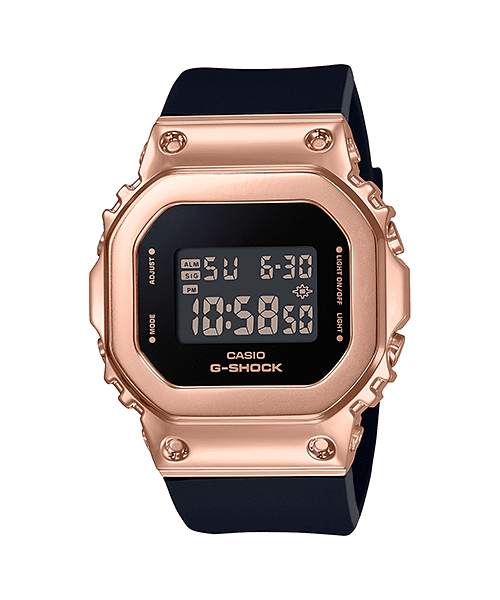
Affordable option: Casio G-Shock
Specialist non-ferrous watches can cost well over $1,000. In the original article, our affordable pick was Casio’s G-Shock range. Some models were selling from about $150 and were marketed as magnetic resistant, making them a less painful everyday option than risking an Apple Watch, Galaxy Watch or Fitbit.
We contacted Casio for its view. The company told us: “Some watches have magnetic resistant features, but unfortunately we have never made official comments on your topic so far.” Casio pointed us to the G-Shock G-100 series as an example of a magnetic-resistant watch.
The G-100 carries a magnetic-resistance specification, but Casio also advises keeping it away from machinery and appliances that generate a strong magnetic field. In other words, the specification is useful watch engineering—not an MR Safe label.
From our own experience, G-Shocks have been a practical choice, and we have seen radiography colleagues choose them for work in departments with 3T systems. That is first-hand experience, not controlled safety testing, so we cannot guarantee that any G-Shock is safe in the MRI environment.
If the classic tactical G-Shock look is not for you, Casio’s smaller and women’s ranges are worth a look. They offer the same hard-wearing appeal for the pushing, sliding and general day-to-day demands of medical imaging.
High-end option: Omega Aqua Terra
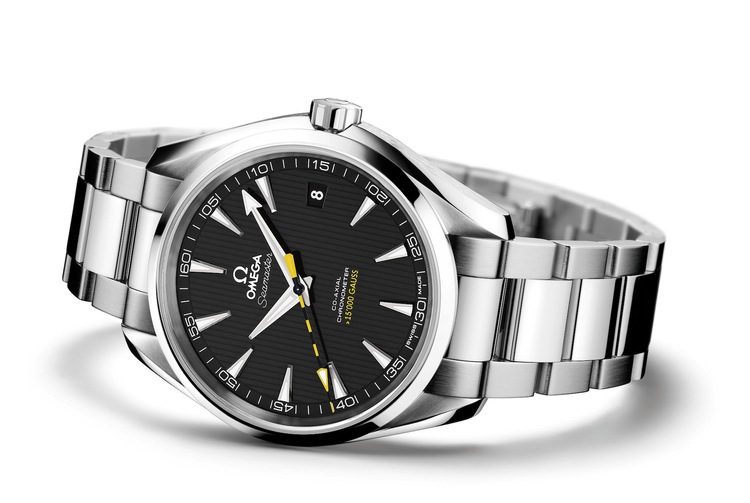
At the premium end, the original article looked at the Omega Seamaster Aqua Terra >15,000 Gauss. Omega describes the movement as resistant to magnetic fields up to 15,000 gauss, or 1.5 tesla, using non-ferrous materials in place of traditional magnetic metals.
That is impressive anti-magnetic engineering, but it is not the same as being labelled MR Safe—and 1.5T magnetic resistance should not be read as permission to wear the watch beside or inside a 3T MRI system. At more than $10,000 when the original article was written, it also requires some serious saving.
The simplest alternative: use the clock
It is not the exciting answer, but a clock on the office wall or at the console is an extremely useful alternative to wearing a watch in or near MRI. It tells you the time without putting an expensive personal device at risk.
Is an Apple Watch MRI safe?
Our first-hand experience was enough to make us cautious. During the informal test described in the original post, an Apple Watch spent roughly five minutes in a 3T MRI room while a patient was being prepared and settled. The watch temporarily stopped working.
Back in the control room, outside the immediate scanner environment, the Apple Watch rebooted and started normally. It appeared to recover, but the incident made us question what repeated exposure might do to a smartwatch over time.
The experience involved an Apple Watch Series 2 and an Apple Watch SE. It was not a controlled experiment and it should not be repeated. Apple confirms that its wearables contain magnets, components and radios that emit electromagnetic fields; Apple does not label the watch MR Safe.
The same caution applies to other smartwatches. Speakers, haptic systems, charging assemblies and bands may contain magnetic or metallic components. A watch surviving one accidental exposure does not establish that it is safe for the next scan—or for the people in the room.
Our verdict for MRI techs
If you want a rugged, affordable watch for routine hospital work outside restricted MRI areas, the G-Shock remains our practical budget favourite. Our experience and that of colleagues is that it tolerates the radiology workplace better than the smartwatches we tried.
But we cannot call it MR Safe without the required labelling and approval. Do not wear any personal watch into the scanner room or another controlled zone unless your facility has explicitly approved that exact device for that use. When in doubt, leave it outside and use the wall or console clock.
Sources & current guidance
- Original Radiology Vine article — MRI Safe Watches that are within your budget!
- ACR Manual on MR Safety — removal of watches and personal devices
- Casio — G-Shock G-100 magnetic-resistance specification and warning
- Omega — user manual describing 15,000-gauss magnetic resistance
- Apple — magnets and electromagnetic fields in consumer devices